Replacing your boiler or upgrading your heating and hot water system is a major investment not only in money terms but the time that you will have to live with it, so we wrote a few pages which we hope will help you decide wisely. But if your are already sure then just click the link below answer a few short questions and get your no obligation fuss free quote instantly to your inbox valid for 30 days**
Help with choosing the right gas boiler for your home
Deciding on the best plumbing & heating system for your home can be a daunting task, so we have written this brief outline which is designed to highlight maybe not all but at least some of the main points to consider.
Systems which include the use of renewable technologies are intentionally ommited as they are beyond the scope of this article. If you are interested in this subject you may want to check out Energy Saving Trust for some inspiration.
There are primarily three gas boiler options combi, system or heat only boilers. There are variations on these three main options but they still operate on the same basic principles. Variations to name a few could be floor or wall mounted storage combi boilers such as Viessman Storage Combi Boilers Hydrogen gas ready boilers, more information here for those that are interested in reading more about it General Interest Hydrogen Gas for UK Boilers . Possibly beyond the scope of this article but worthy of mention non the least, Indirect HIUs (Twin Plate) units. These can be found amoungst other places in appartments particularly in new developments where communal hot water is generated in purpose made plant rooms somewhere within the building. Communially heated water enters the unit and heat is transfered to the appartments heating circuit water and hot water storage via heat exchangers within the units, Gas is not used in the unit just an electrical power supply to operate a circulation pump.
Underfloor heating
Underfloor heating is generally made up of one or more circuits of small bore highly flexible plastic pipe. Flow rates and water temperature are lower than that you generally find in a radiator circuit, so it is kept separate from the radiators by the use of manifolds and blending valves. The general concensus of opinion is that although underfloor heating will work with any boiler type if set up correctly a modern condensing boiler with low modulation would be the preferred choice. Lastly very important but often ommited is use of the correct type of heating water corrosion inhibitor. Plastic pipes do not rust but they can and will if left untreated encourage the growth of bacterial sludge which if left unchecked can cause a blockage and the system to fail. In addition to normal corrosion inhibitor for radiators it is highly recommended to use a Biocide mix as well, you should also choose the non standard filter for example an Adey Magnaclean Twin Tech Filter . which is a dual-action filter capable of capturing magnetic and non-magnetic debris as well as biological films. Specifically designed for use with underfloor heating systems.
Futureproofing for renewables
As mentioned above these notes are not about renewables as such, but one day however long away it may seem future governments may force us all to convert, so taking a few precautions now may make things cheaper and easier for you should the day come. Most renewables rely on the release of low power energy over an extended period. The temperature and flow rates within the systems are much lower than what you will be used to, pipework and radiators will not feel so hot to touch, so in order to heat your home and hot water effectively bigger bore pipework is needed, this increases the surface area from which the heat energy can be transferred, in other words your average 15 milimetre pipework won't work well enough, so when designing and installing your new boiler and heating system oversizing the pipework can be a fairly simple and relatively modest investment, which far outweighs the future retro fit costs you would be facing later.
Heat Only Boilers
Heat only boilers work in properties that have space for a hot water cylinder and cold water storage tanks either in the roof space or a high point in the building. They are offered in several kilowatt ratings to match your heating and hot water demand.
Something to take into account when choosing a Heat only boiler from any manufacturer when compared to a combi boiler is that there is a lot less to go wrong, however this is only bacause several main components found in a combi boiler are exterior on a Heat only boiler and found as part of your heating system itself rather than within the boiler casing. So if your heating system components are generally in poor shape you may find the benefits of a combi boiler outweigh the disadvantages.
In summary the advantages are that if you have a tried and tested open vented system and you have a high demand for hot water swapping to a combi might not be the best for you, also worth bearing in mind combi boilers rely on good mains water pressure to work well whereas a vented system is only dependant on the capacity of the tanks and how high you can get them, as its gravity that creates the water pressure needed to fill your baths quickly and give the family a satisfying shower. There is also the added advantage of being able to heat your hot water via an immersion heater, should you ever need to. If a combi boiler fails you loose everything hot water as well as heating. Even though the cost of a Heat only boiler is generally slightly more than a combi boiler unless you have a really good reason to swap you may well be better to stick with what you have, and just make it better.
The cost of converting a heat only boiler to a combi system will be totally dependant on numerous factors but as a general rule of thumb you will be looking at somewhere between £800 and £1200 extra for the alterations needed.
System Boilers
System boilers work in properties that have space for a hot water cylinder, they do not require cold water storage, the same as heat only they are offered in several kilowatt ratings to match your heating and hot water demand.
System boilers are dependant on your area having good mains cold water pressure, if not you will need to provide additional components capable of boosting water pressure, such as accumulator tanks or pumped units. These additions will obviously add to cost plus the space needed for its location.
System boilers unlike heat only boilers are not vented to atmosphere, in the event of the system becoming overpressurised and temperatures rising dangerously safety valves kick in to release the superheated high pressure water safely out of the building via discharge pipework. Installation of discharge pipework is governed by strict rules implemented by the local councils building control department. This means in practice that the position you choose for the hot water cylinders location may be limited.
The generally accepted minimum mains cold water pressure is 1.5 bar with a minimum flow rate of 20 litres per minute. So therefore before investing in one of theses systems you must take measurements. the 1.5 bar pressure is dynamic pressure meaning it is taken at one take off point while one of your other taps is running fully. Otherwise you are only measuring static pressure which is not the same.
The key advantage is being able to do away with the cold water storage tanks, yet still have a healthy supply of hot water via a hot water cylinder. Also having what is a refered to as a balanced supply allows modern showers and numerous other plumbing fittings to run at optimum performance. Plus as with the heat only vented option you can use alternatives to your boiler to heat the hot water such as immersion heaters.
Worthy of note anybody you employ to attend to your unvented hot water cylinder must be G3 qualified and trained (G3 being a section of the building regulations) they will also be able to provide their qualification card on demand. So any old plumber won't do. The reasons for this requirement was brought about by several high profile incidents in the past which involved significant injury and damage to property.
Combi Boilers
Combi boilers the favorite amoungst London flat dwellers with minimal space,and possibly the most versatile of all the boilers available, especially with the advent of the "storage combi boiler" mentioned earlier. Like anything though they need a little TLC and their creature comforts including a good clean supply of Thames Water at decent pressure, crystal clear heating system water and regular checkups. Provide these and you should be rewarded with relatively trouble free use for many years to come.
In a nutshell there is no cold water tanks or hot water storage tanks to worry about, hot water is on demand with more than enough power to manage modest heating circuits.
As with anything though good design and attention to detail during installation is needed to get the best out of your investment, Sadly the popularity of the combi boiler and its apparant ease of installation has led to a rise in the number of happy go lucky cheap and cheerful stick it anywhere all done in a day merchants, who have given little or no thought or professional skill of any kind in fitting your new boiler. Ultimately this results in you the customer suffering from numerous future break downs, bathrooms with little or no hot water and luke warm radiators.
There isn't any sure way of knowing which installation company is the best to use as often the worst ones will have slick advertising campaigns with hundreds of happy smiling customers and seem totally convincing, but in reality they will be totally reliant on independant contractors who have one single aim which is to be in and out of your property as quickly as possible so they can get home early enough to do it all again the next day.
We do offer instant estimated boiler quotes on our website, just like the national companies mentioned earlier, however thats where the similarity ends, we personally survey each boiler replacement enquiry, using pedal power to get to you of course. We will do a heat loss calculation check the quality of your water and pipe sizes not only for your gas supply but the pipework to your hot water outlets, length of runs, check water flow rates and pressure. Only then will we either go with your original choice or advise you of a more appropriate solution which more closely matches your requirements.
Boiler Makes & Models
When you use our instant boiler quote tool we provide boiler options which match the choices you make, you will notice that we only offer boilers from a handful of manufacturers. That is because our engineers have attended the companies product training days and satified themselves that makes and models we offer are in our opinion the best currently available, our preferred manufactures are Baxi, Worcester, Vaillant, Ideal & Viessman. Although each of these companies produce a wide range of products we stick where ever possible with the tried and tested versions.
As mentioned earlier each boiler installation is surveyed prior to any agreement so if you as a customer have a boiler preference that we have not mentioned please let us know and we will do our best to satisfy your requirements.
Central Heating System Cleaning Demystified
The minimum level of system cleaning before fitting a new boiler is a chemical flush, it is appropriate if your system water if fairly clear and the radiators generally all heat up evenly. The chemical used is a cleaning fluid entered into your system and then heated up by the boiler and allowed to circulate. If you read the labels they generally say allow to circulate for a minimum of one hour and a maximum of 14 days preferably for best results somewhere between 4 and 5 days.
So I would pose the question how long is your gone in a day fitter going to allow it to circulate, and secondly choosing the appropriate type of cleaning needed is not guess work, the heating system water should be tested initially to decide on condition and finally after cleaning to prove effectiveness of the treatment. Needless to say this method can work very well but only if the boiler to be changed is still in working order. Otherwise you will need to use the new boiler to circulate i.e cleaning post fitting meaning that your new pride and joy is going to welcomed into your household with an unhealthy dose of sludge and grime. Arguably ok if your central heating system water is generally ok but a big no no if it isn't.
Magnacleanse Perfectly fine if your existing boiler is running because as with the chemical flush the boiler operated pumps circulate the cleaning fluid, the difference to a chemical flush is that on the return the system water passes through filters which contain powerful magnets which extract damaging metal particles of corrosion ultimately protecting the boiler from future damage.
A big thing to take on board is that with the Magnacleanse a magnetic filter needs to be already fitted, as the cleaning machine is attached via the filter connections.
Ultimately though as with the chemical flush if your boiler has stopped working you can only make this work if you use the new boiler to circulate the water subjecting it to effectively a very dirty bath right out of the box. Also the assumption has to be that you are carrying out a Magnacleanse because your heating system is actually quite dirty hence the reason for not opting for the chemical flush.
In a nutshell, chemical flush and or Magnacleanse perfectly fine if completed using your old boiler to circulate cleaner. Not perfectly fine to fit a new boiler then clean with it.
Powerflush There is no perfect solution but this has to be as close as you can get to one. The powerflush machine is much more flexible than the Magnacleanse in so far that it can be connected in numerous ways not just via a filter, also the boiler can be isolated during the cleaning process. Very important if it has an aluminium heat exchanger with very narrow water ways that can be effectively written off with a blockage.
Powerflush machines can also be adapted to incoorperate a magnetic filter arrangement as well so when used this method can proove to be quite effective.
In summary powerflush is more expensive than a Magnacleanse which is more expensive than a chemical flush. To be reasonably effective a chemical flush needs two visits, Magnacleanse will take between 3 -5 hours to complete depending on the number of radiators, a powerflush 4 to 6 hours or more depending on size of system.
I hope that helps a bit final take home in our opinion if you don't want endless problems and callbacks to deal with avoid the gone in a day or less brigade.
Boiler Flues
If you have looked online and had a quote from any of the national boiler fitting companies you are probably quite used to being asked questions about where your boilers flue (chimney of sorts) comes out, these questions will make a difference to your quote, in fact it can be a deciding factor as to whether your boiler needs to be repositioned which of course will result in additional cost to you.
As we survey each installation prior to confirmation the surveyor will know if your flue will be suitably positioned so we don't need to rely on you going to have a look. However if you use our online instant estimated quote tool we do ask if you have a horizontal or a vertical flue as the price of access when and if required to change your flue is not included in our online quote or for that matter any other similar companies.
** Quotes are estimated cost based on the information you provide and subject to survey for confirmation, plus standard terms and conditions apply





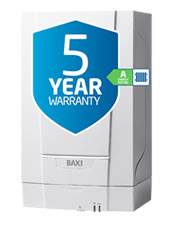
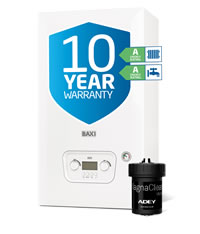 In a nutshell there is no cold water tanks or hot water storage tanks to worry about, hot water is on demand with more than enough power to manage modest heating circuits.